2‑Day Fes Itinerary: How to See the Best of Fes in 48 Hours❤️
Fes is not a city you rush. It is a city you learn to read. Sounds replace street signs, smells guide your steps, and history reveals itself slowly. Many travelers worry that two days are not enough — and they are right in one sense. But with the right pacing and mindset, a Fes itinerary 2 days can give you depth, not just highlights.
This guide is written exactly as I plan a Fes city break for travelers I personally accompany: realistic walking distances, moments of rest, and space to absorb what you are seeing rather than racing through it.
Before You Start: Preparing for 48 Hours in Fes
When to Visit
The best seasons for a short stay are spring (March to May) and autumn (September to November). Temperatures are comfortable, and walking inside the medina is manageable. Summer heat can be intense, while winter evenings can be cold.
Where to Stay
For a two-day visit, staying inside Fes el-Bali (the medina) is strongly recommended. A traditional riad allows you to step directly into the city’s rhythm and saves valuable time.
How to Move Around
- The medina is entirely pedestrian
- Taxis are used only outside the old city
- Comfortable walking shoes are essential
Getting lost is part of the experience. Feeling overwhelmed at times is normal.
Day 1: Entering the Heart of Fes
Morning: Bab Bou Jeloud and First Steps into the Medina
Begin your first morning at Bab Bou Jeloud, the iconic Blue Gate. This is more than an entrance — it is a psychological transition. Once you pass through, modern Morocco fades quickly.
Enter slowly. Let your senses adjust. The first hour in Fes should be about orientation, not efficiency.
Walking Talaa Kebira
Follow Talaa Kebira, the main artery of the medina. Shops, schools, mosques, and workshops exist side by side. You will see students, craftsmen, donkeys carrying goods, and families going about daily life.
This walk introduces you to the city’s density and energy.
Late Morning: Al Quaraouiyine Area
You cannot enter the mosque as a non-Muslim, but the surrounding area represents the spiritual and intellectual core of Fes. Learning, prayer, and commerce intersect here.
Pause often. This area carries centuries of continuity.
Lunch: Inside the Medina
Choose a simple restaurant inside the medina or return to your riad for lunch. Moroccan meals take time. Avoid rushing.
This break is essential for managing energy during your Fes itinerary 2 days.
Afternoon: Tanneries and Artisan Quarters
In the afternoon, visit one of the leather tanneries from a terrace above. The sight is powerful, the smell unforgettable, and the process unchanged for centuries.
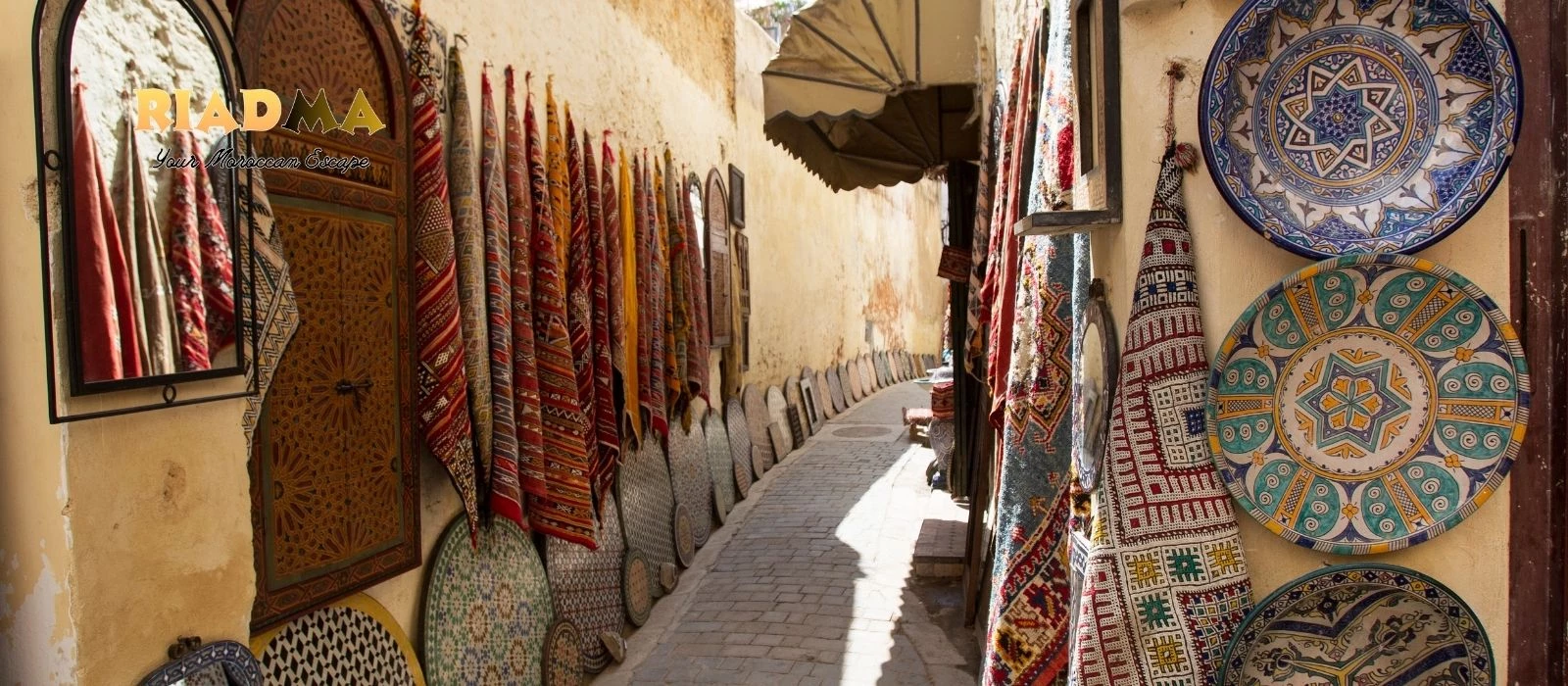
Continue through nearby artisan quarters. Metalworkers, woodcarvers, and weavers work as they always have — this is not a performance.
Late Afternoon: Nejjarine Square
Nejjarine Square offers relief from intensity. The fountain, surrounded by carved wood, reflects the city’s refined craftsmanship.
If energy allows, visit the wooden arts museum for context and rooftop views.
Evening: Quiet Inside the Riad
Evenings in Fes are best spent quietly. Dinner inside your riad or a nearby restaurant allows you to decompress.
The city calms after sunset, especially inside thick walls.
Day 2: Understanding Fes Beyond the Maze
Early Morning: Medina at Its Calmest
Wake early. This is when Fes feels most authentic. Streets are quieter, shops open slowly, and light filters gently through alleys.
This hour alone justifies staying inside the medina.
Morning: Bou Inania Madrasa
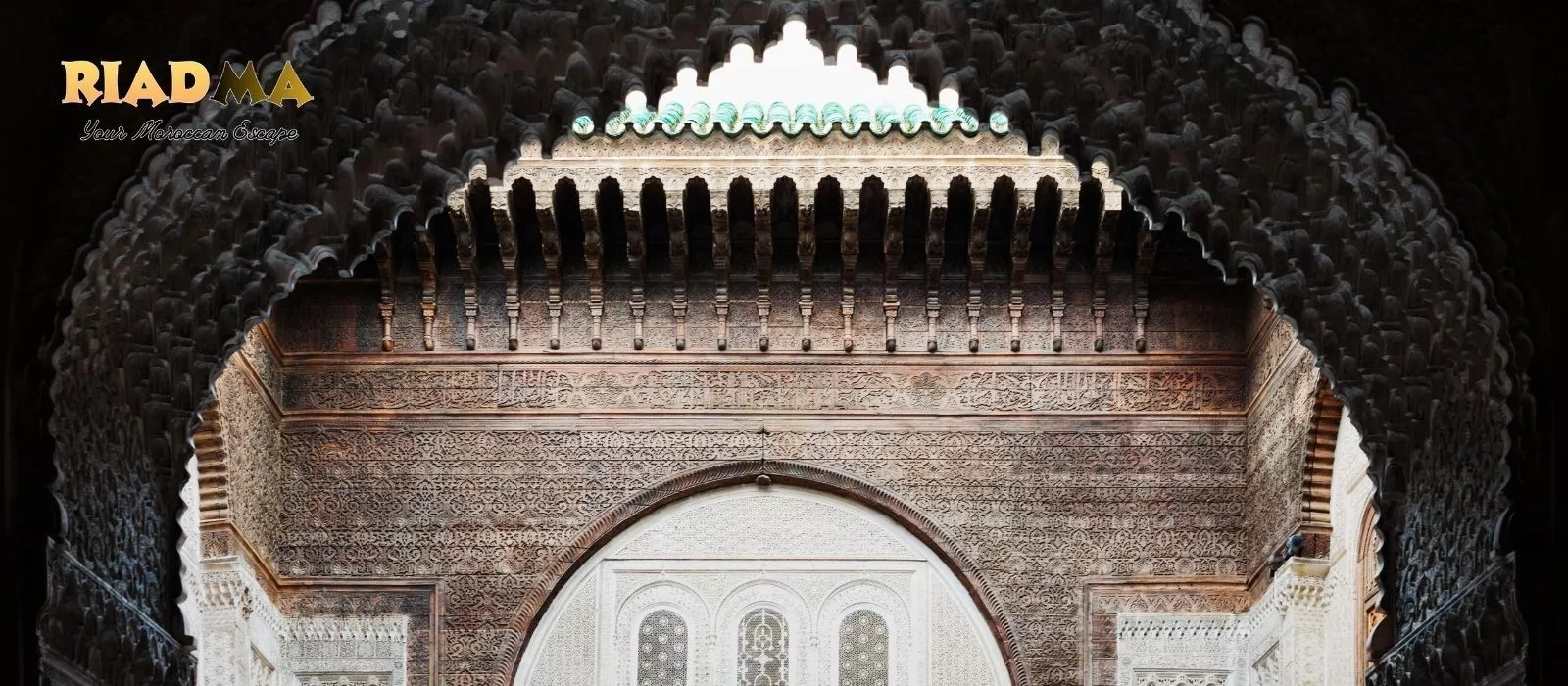
One of the few religious buildings open to non-Muslims, this madrasa reveals the city’s architectural precision. Zellij tilework, carved plaster, and cedar wood surround a peaceful courtyard.
Notice how silence replaces chaos instantly.
Exploring Residential Areas
Move away from the busiest routes into more residential sections of the medina. Children play, neighbors greet one another, and everyday life unfolds without concern for visitors.
This is where Fes becomes human rather than monumental.
Lunch: Traditional and Slow
Choose a traditional lunch. Fes is known for refined cuisine, often more subtle than other Moroccan cities.
Meals are moments of rest, not refueling stops.
Afternoon: Fes el-Jdid and the Mellah
In the afternoon, step outside Fes el-Bali and explore Fes el-Jdid, the former royal city. The Jewish quarter tells an important part of Fes’s layered history.
The architecture here feels more open and ordered.
Late Afternoon: Panoramic Viewpoints
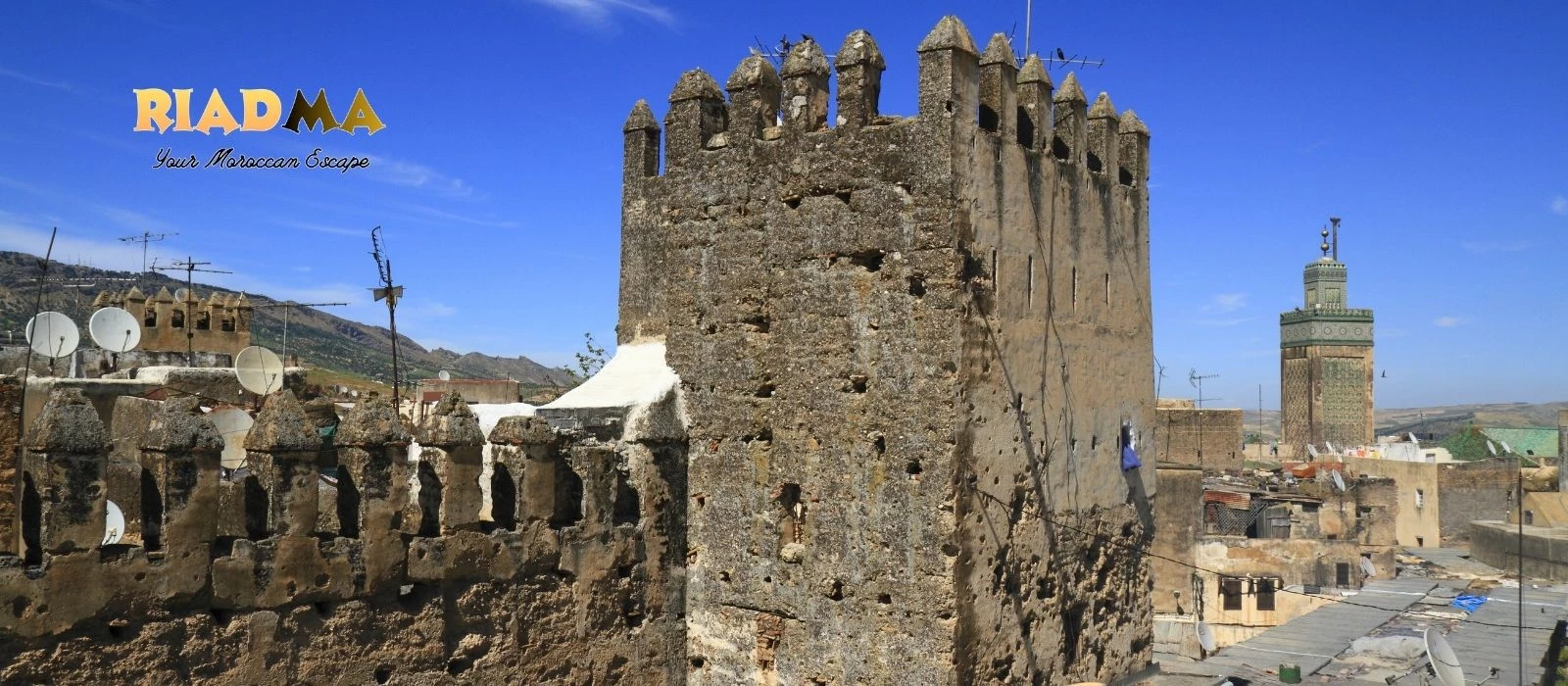
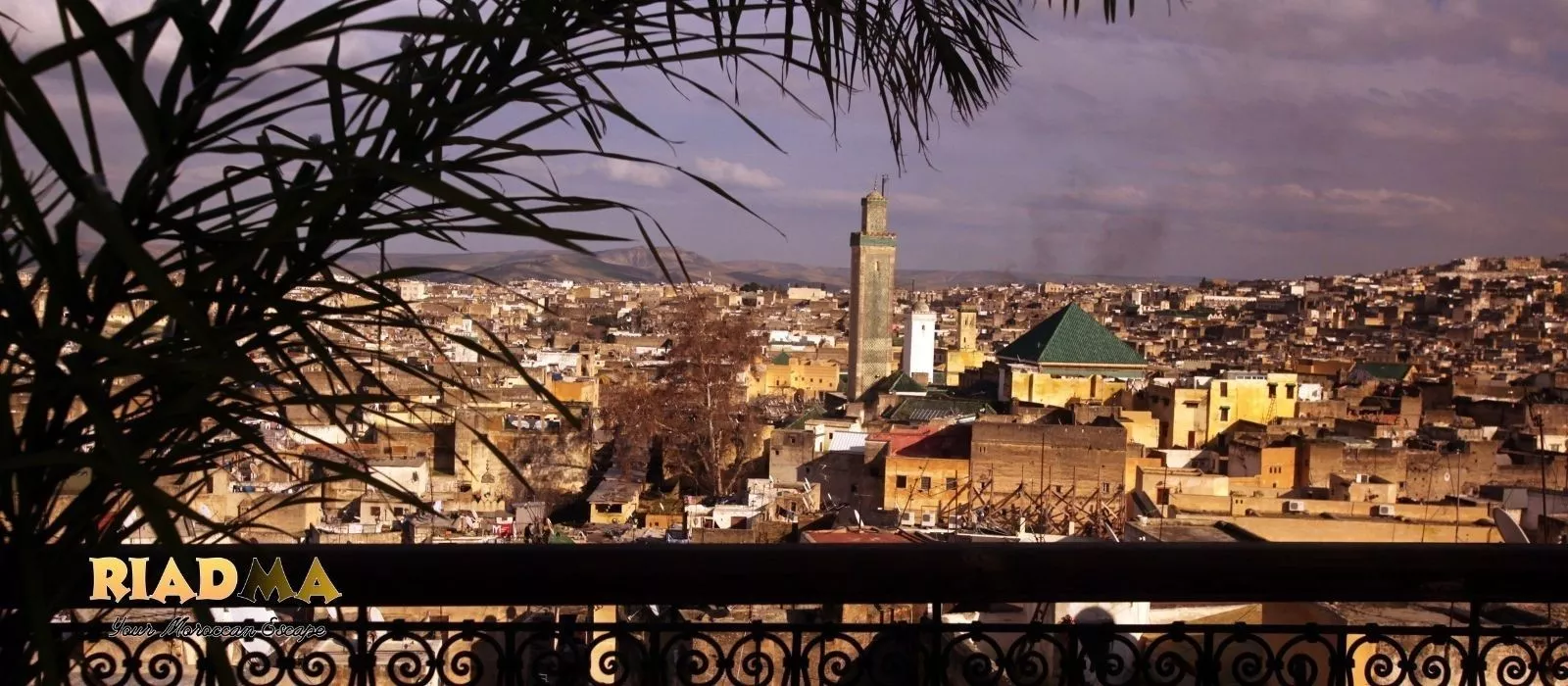
End your visit with a panoramic viewpoint overlooking the medina. From above, the maze becomes understandable.
This perspective completes your Fes city break, turning confusion into comprehension.
Cultural Tips Foreigners Should Know
- Dress modestly at all times
- Greetings matter — say hello first
- Ask permission before photographing people
Courtesy is noticed and appreciated.
Do’s and Don’ts in Fes
Do
- Hire a licensed guide for your first morning
- Take breaks when needed
- Stay patient and observant
Don’t
- Follow unsolicited guides
- Rush from attraction to attraction
- Expect modern convenience everywhere
Local Insights Google Maps Won’t Tell You
Landmarks matter more than street names.
Dead ends are common and normal.
The medina changes personality throughout the day.
Is Two Days Enough for Fes?
Two days do not reveal everything, but they reveal what matters.
A well-paced Fes itinerary 2 days gives you grounding, context, and respect for the city’s depth.
Final Thoughts on a Fes City Break
Fes does not adapt to travelers. Travelers adapt to Fes.
The best Fes city break is one where you accept complexity, slow your pace, and allow the city to guide you.
In conclusion, this Fes itinerary 2 days is not about seeing everything — it is about seeing enough to understand why Fes remains one of the most powerful urban experiences in the world.
You leave Fes not with a checklist completed, but with perspective gained — and that is its greatest gift.