Best Food Experiences in Morocco: Cooking Classes and Food Tours❤️
The first thing you notice in Morocco is the smell.
It arrives before the colors, before the voices, before you even understand where you are. Warm bread baking somewhere nearby. Cumin and ginger rising from a hidden kitchen. Charcoal smoke drifting lazily through a narrow street. Long before you taste anything, Morocco feeds you through the air.
The most unforgettable morocco food tours are not about eating until you are full. They are about being invited—into homes, into conversations, into a rhythm of life that revolves around food as memory, identity, and care.
This is not cuisine served behind glass. This is food that lives.
Morning in Marrakech: When the City Wakes Up Hungry
Marrakech wakes up slowly, but its kitchens never really sleep.
At dawn, the medina feels hushed. Shop doors are still closed. Cats stretch across warm stones. Then the ovens come alive. You hear them before you see them—wood crackling, metal doors opening, trays sliding in and out.
A marrakech food tour often begins like this, quietly, with bread still too hot to hold. A baker breaks a round khobz open with his hands and presses it into yours. Steam escapes. The crust crackles. You tear a piece, burn your fingers slightly, and smile without thinking.
No one rushes you. No one explains much. You are simply there, sharing the start of the day.
Walking, Tasting, Belonging
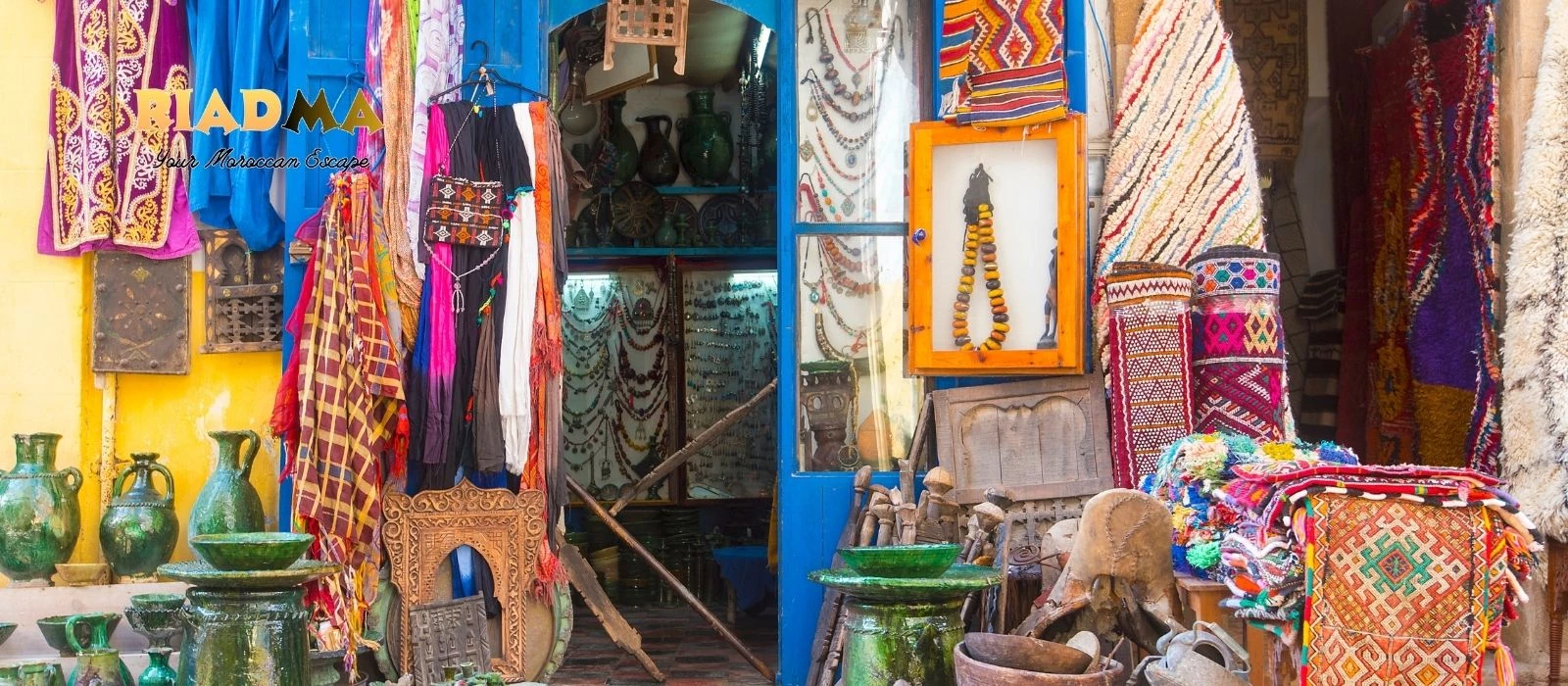
As the sun climbs, the medina fills with sound. Vendors call out greetings. Scooters weave through impossible spaces. Copper pans catch the light. Spices pile high in open sacks—reds, yellows, browns—each one carrying a story.
You taste olives cured in ways you’ve never encountered. Sharp, lemony, smoky. You sip fresh orange juice pressed seconds before, sticky sweetness running down the glass. Somewhere, chickpeas simmer slowly, releasing a smell that feels grounding, almost comforting.
A street food tour Morocco is not chaotic when you’re inside it. It flows. You stop when something smells right. You trust the rhythm of the street more than any plan.
Strangers smile at you as you eat. Children watch with curiosity. Someone asks if you like it. You nod, mouth full, and they laugh.
The Hidden Kitchens of Marrakech
Behind unmarked doors, another world exists.
You step off the street and into a courtyard filled with light. Orange trees. Worn tiles cool beneath your feet. This is where many food experiences in Marrakech truly begin.
A woman greets you with flour on her hands and warmth in her eyes. She doesn’t introduce herself formally. She leads you straight to the kitchen.
The air smells of onions softened slowly in olive oil. Spices are measured not with spoons, but with instinct. She shows you how to roll dough, how to listen to it, how to know when it’s ready by touch alone.
This is a moroccan cooking class, but it doesn’t feel like a lesson. It feels like being trusted.
Cooking with All Your Senses
You learn by doing. By touching warm dough. By crushing garlic under your palm. By inhaling deeply when saffron meets heat.
No one hurries you. Mistakes are smiled away. There is time.
You stir slowly. You taste constantly. You adjust without measuring. Somewhere between chopping herbs and layering vegetables, you forget you are a traveler at all.
Laughter fills the kitchen. Stories emerge, half-translated, half-understood. Someone tells you how their mother cooked this dish. Someone else remembers learning it as a child.
Food here is lineage.
Sharing the Table
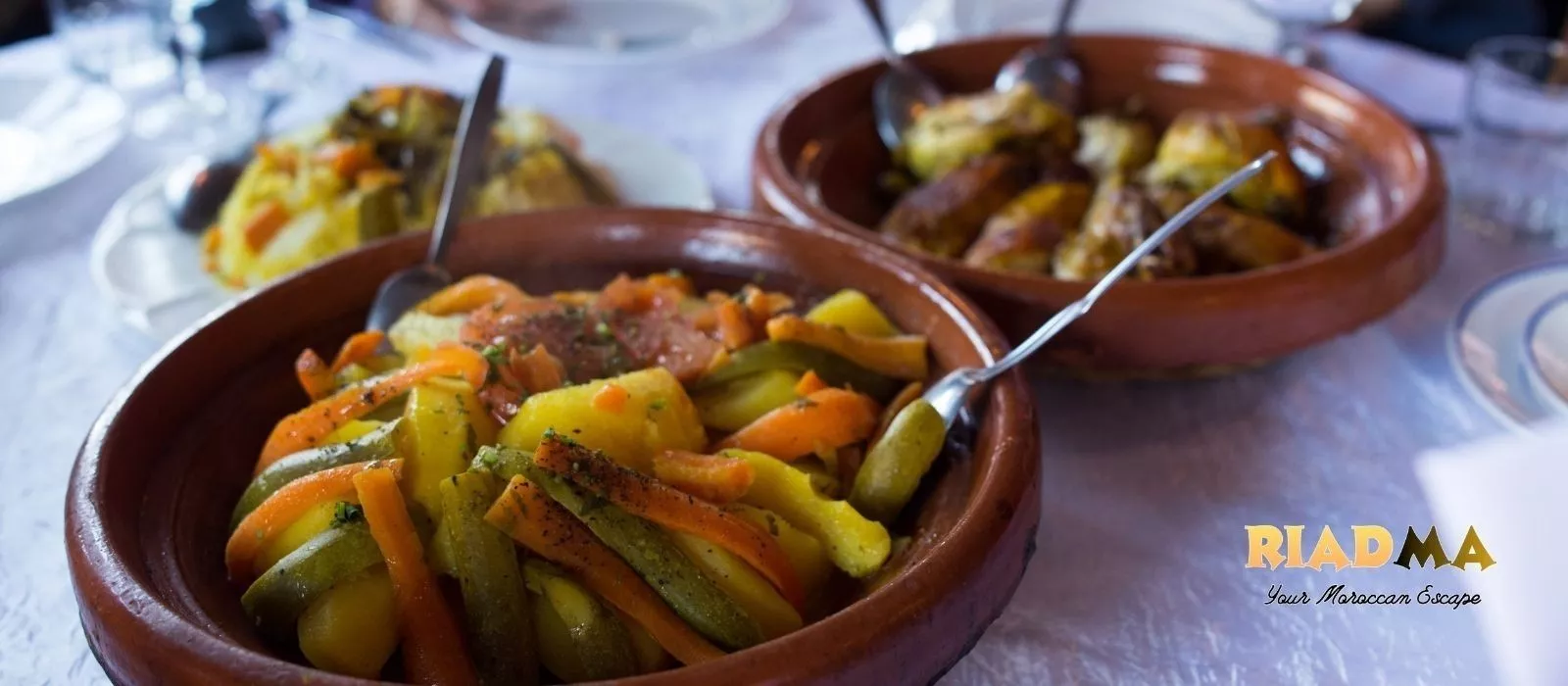
The meal is never rushed.
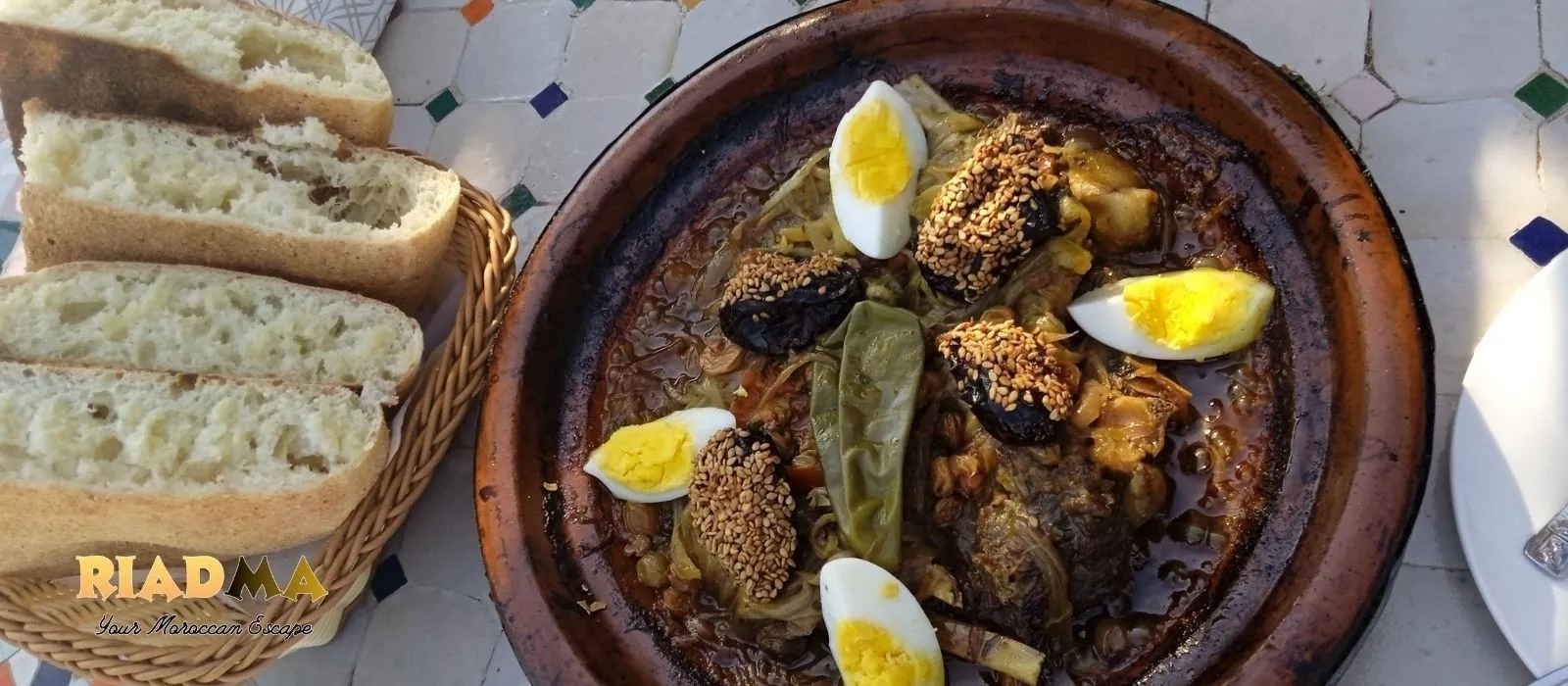
When everything is ready, the table fills. Dishes arrive one by one, placed gently, proudly. Steam rises. Colors deepen.
You eat together, seated close, tearing bread and dipping into shared plates. Flavors unfold slowly—sweet, savory, earthy, bright. Each bite feels layered, intentional.
Conversation ebbs and flows. Sometimes there is silence, and it feels perfect.
You are not being served. You are being included.
Afternoon Markets and Everyday Rituals
Later, the markets call again.
This time, you notice details you missed before. The way vendors stack tomatoes just so. The sound of knives against wood. The smell of mint crushed repeatedly throughout the day.
On a quiet corner, a man pours tea with practiced grace. The glasses clink softly. Foam rises. You sit on a low stool and drink slowly, watching life move past.
Morocco teaches you to slow down through food.
Evenings Filled with Smoke and Stories
As night falls, the city changes flavor.
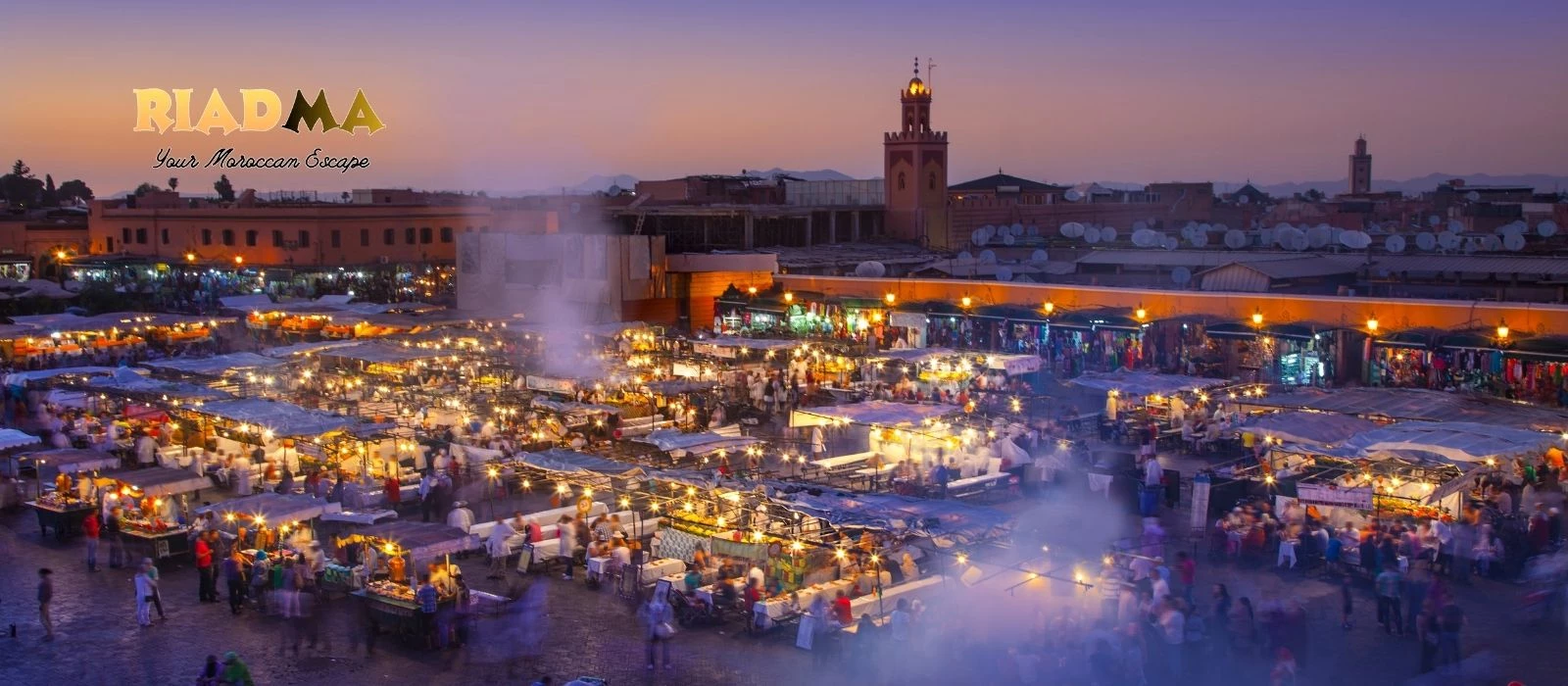
Smoke drifts from grills. Skewers sizzle. Laughter grows louder. The air thickens with spice and heat.
You try things you can’t name. Some are unfamiliar, even intimidating. You taste anyway. You trust the hands that made them.
A street food tour Morocco at night feels intimate, almost secret. The streets glow under lamps. The sounds soften. People linger.
You stand shoulder to shoulder with locals, eating from paper plates, fingers shiny with oil and sauce. No one cares how you look. Only that you enjoy.
Moments That Stay With You
The most powerful food memories are small.
- The warmth of bread wrapped in cloth
- The sharp sweetness of mint tea at dusk
- The smell of spices on your hands long after eating
- The way strangers smile when you say “it’s delicious”
These moments settle quietly into you.
Food as a Language
In Morocco, food speaks when words fall short.
You don’t need fluency to understand generosity. You don’t need explanations to feel welcome. You taste, and you know.
The best morocco food tours don’t teach you recipes alone. They teach you patience. Presence. Respect.
You learn that meals are not interruptions to the day—they are the day.
Leaving the Table Changed
When the journey ends, you carry flavors with you.
Not just in memory, but in instinct. You cook differently. You eat slower. You listen more.
You remember hands guiding yours as you learned. Voices laughing around a shared dish. The feeling of being welcomed without expectation.
Morocco feeds you deeply.
And long after the last meal, you realize it was never just about food. It was about being allowed, even briefly, to belong.