Best Morocco Desert Experiences: From Camel Treks to Luxury Camps❤️
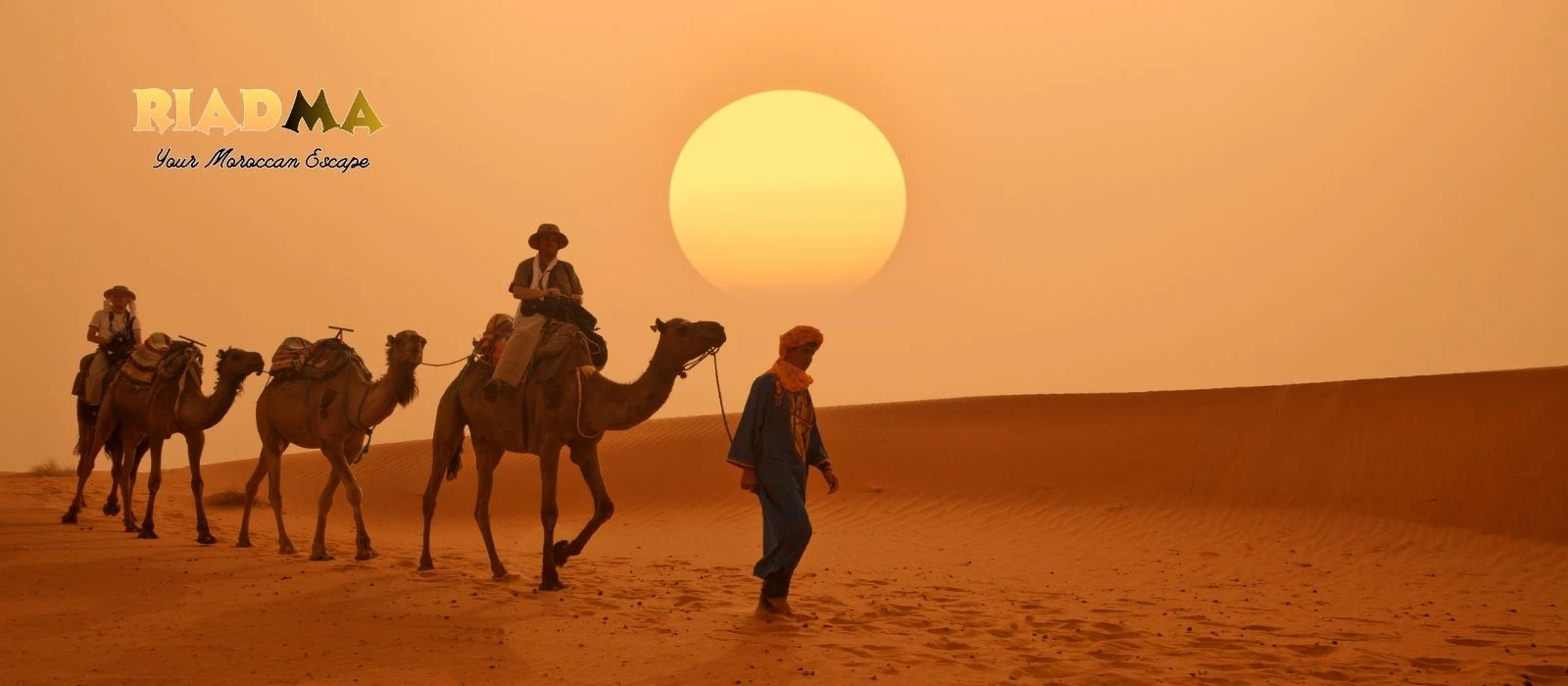
The Moroccan desert is not a single place. It is a journey. A slow transition from green valleys to rocky plains, from palm-filled oases to endless waves of sand. When travelers search for morocco desert tours, they often imagine a postcard moment: a camel silhouette at sunset, golden dunes, a star-filled sky. What they don’t always expect is how deeply personal and emotional the desert experience can be.
After guiding travelers across Morocco for years, I’ve learned that the desert is where Morocco speaks the most quietly—and the most honestly. Whether you choose a simple camel trek or a refined night in a luxury camp, the desert has a way of slowing you down and grounding you in the moment.
Understanding the Moroccan Desert: More Than Just Sand
The term Sahara Desert Morocco is often used broadly, but the reality is more nuanced. Morocco’s desert regions include vast sand seas, rocky plateaus (hamadas), dry riverbeds, and lush oases hidden between mountains. Each area offers a different kind of experience.
The most famous sand dunes—those tall, rolling dunes you see in photos—are found mainly in two regions: Merzouga in the east and Zagora in the south. Both are gateways to unforgettable desert adventures, but they feel very different once you arrive.
Merzouga Desert Tour: Deep Sahara, Endless Dunes
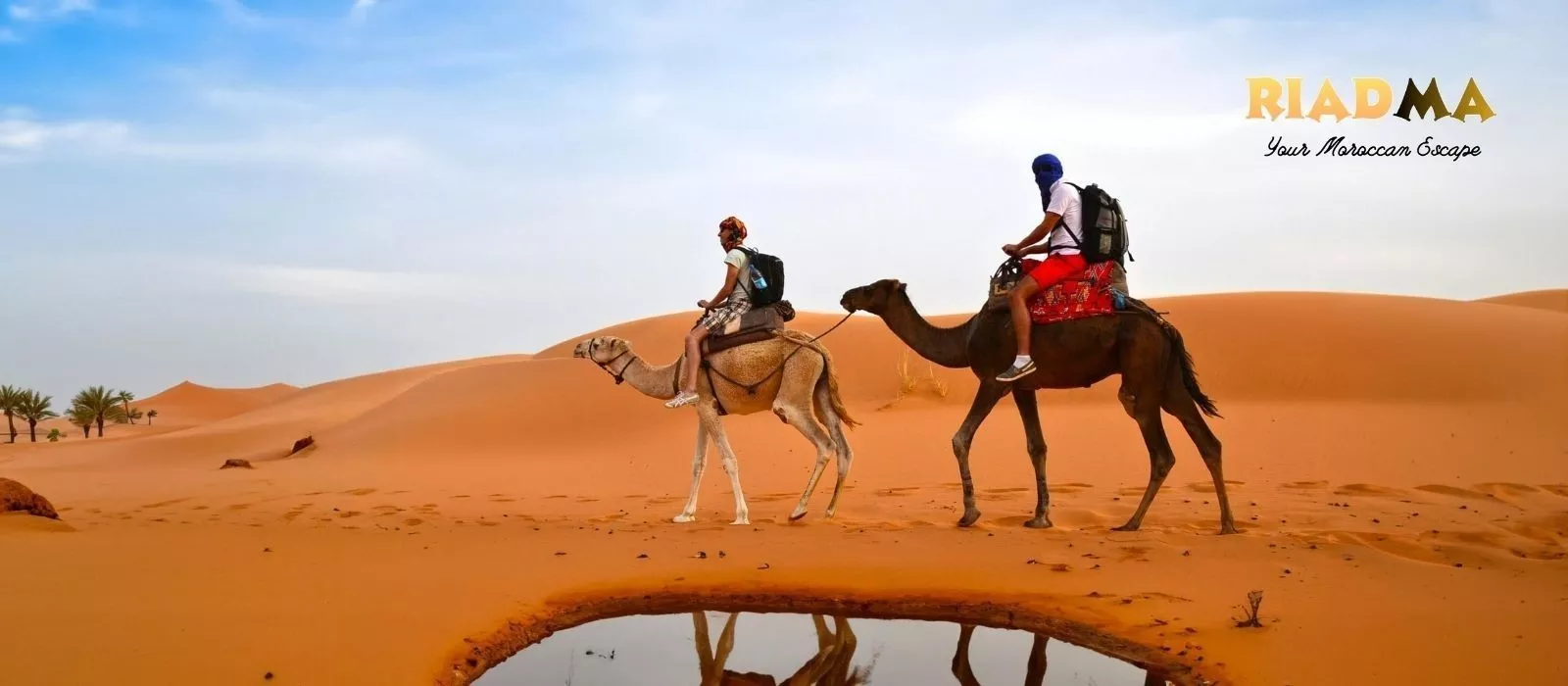
If you dream of towering dunes and a true Sahara immersion, a Merzouga desert tour is the experience most travelers are looking for. Merzouga sits on the edge of Erg Chebbi, one of the largest dune fields in Morocco.
The dunes here can reach over 150 meters high. At sunrise and sunset, their color shifts from soft gold to deep orange and even purple. It’s not dramatic in a loud way—it’s quiet, almost meditative.
What a Merzouga Desert Experience Feels Like
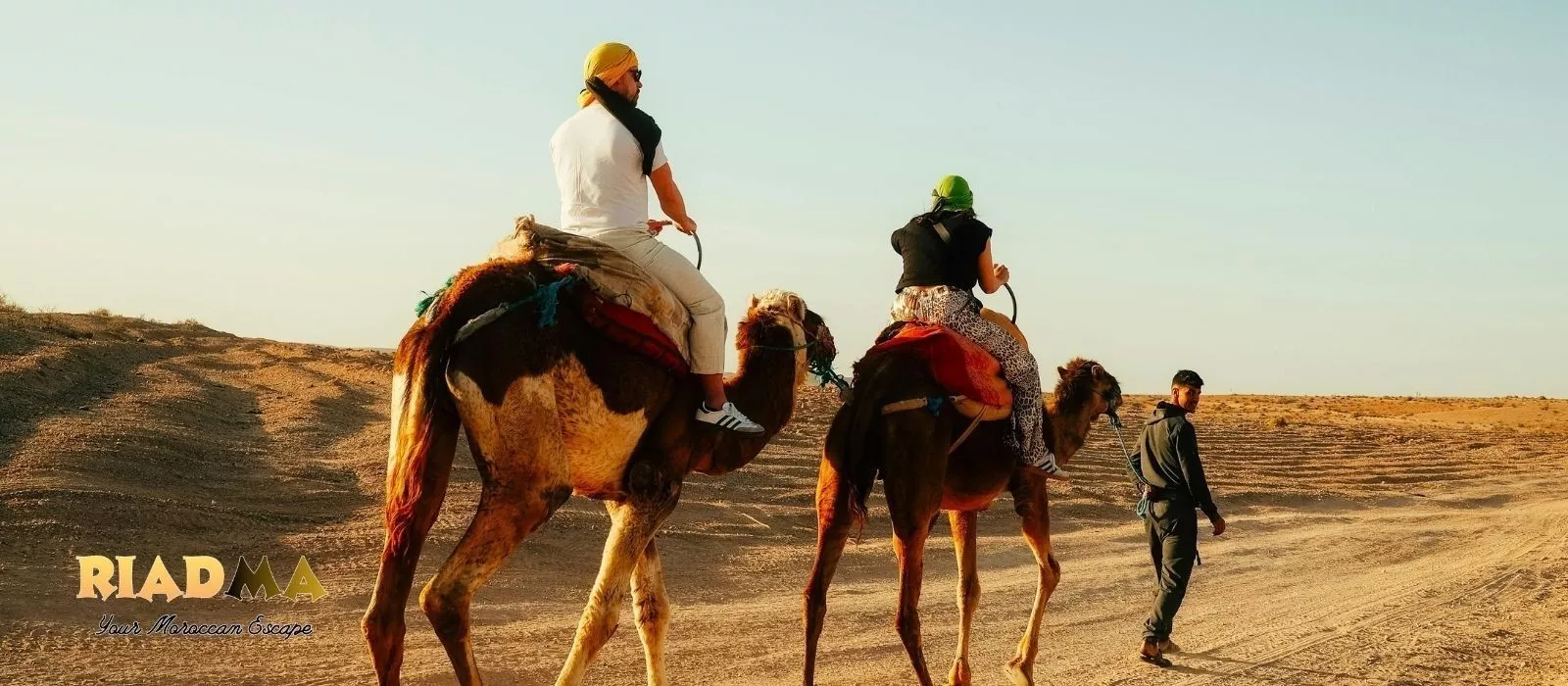
Most visits include a camel trek Morocco travelers often describe as surprisingly peaceful. The camels move slowly, rhythmically, giving you time to absorb the silence. As you leave the village behind, modern noise disappears. No traffic. No notifications. Just wind and sand.
Nights are spent in desert camps ranging from traditional to high-end luxury. Even the most comfortable camps respect the desert’s simplicity—low lighting, open skies, and a sense of space you don’t find in cities.
Who Merzouga Is Best For
- Travelers seeking classic Sahara landscapes
- Photographers and stargazers
- Couples and honeymooners
- Those who want a once-in-a-lifetime desert memory
Zagora Desert Tour: Raw, Authentic, and Close to the Road
A Zagora desert tour offers a different kind of beauty. Located closer to Marrakech, Zagora is often chosen by travelers with limited time. While the dunes here are smaller than Merzouga’s, the experience feels more rugged and local.
Zagora’s landscape is a mix of desert plains, palm groves, and ancient caravan routes once used by traders heading to Timbuktu. The famous sign reading “Timbuktu 52 Days” is not a joke—it reflects Zagora’s deep historical role in trans-Saharan trade.
What Makes Zagora Special
The desert here feels closer to everyday Moroccan life. You pass through villages where children play football in the sand and families tend date palms as they have for generations. It’s less polished, but deeply human.
Short camel rides are common, usually at sunset, followed by dinner and music around the fire. It’s not about grandeur—it’s about connection.
Who Zagora Is Best For
- Short stays from Marrakech
- First-time visitors unsure about long desert drives
- Travelers interested in culture over scenery
Camel Trek Morocco: What to Expect Honestly
A camel trek Morocco experience is not difficult, but it’s important to have realistic expectations. Camels are gentle animals, but mounting and dismounting can feel awkward. The ride itself is slow and steady, not bumpy or rushed.
Dress comfortably. Loose clothing, long sleeves, and a scarf (or cheche) protect you from sun and wind. Guides will often show you how locals wrap scarves—it’s practical, not decorative.
Most treks last between 45 minutes and 90 minutes, depending on the camp location. Longer treks are possible, but for most travelers, the magic lies in quality, not duration.
Luxury Desert Camps vs Traditional Camps
Morocco desert tours now offer a wide range of accommodation styles. Choosing between them depends on what kind of experience you value.
Luxury Desert Camps
Luxury camps provide real beds, private bathrooms, hot showers, and beautifully designed tents. Meals are refined, often combining Moroccan flavors with international comfort. These camps are ideal for travelers who want desert immersion without sacrificing comfort.
Traditional Desert Camps
Traditional camps are simpler. Shared facilities, modest tents, and meals cooked over open fires. What they lack in comfort, they make up for in atmosphere. Music around the fire feels more spontaneous, and conversations often last late into the night.
When Is the Best Time for Morocco Desert Tours?
Timing matters greatly in the desert.
- October to April: Ideal season. Pleasant days, cool nights.
- December to February: Cold nights, sometimes near freezing, but beautiful light.
- May to September: Very hot. Not recommended unless you are well-prepared.
Spring brings occasional sandstorms, while autumn offers calm skies and stable temperatures. I usually recommend late October or early April for first-time visitors.
Getting There: What Google Maps Won’t Tell You
Distances in Morocco are deceptive. Roads may look short on maps, but mountain passes, stops, and road conditions make journeys longer than expected. A trip to Merzouga from Marrakech typically takes two days, not one.
Many travelers underestimate how scenic the journey itself is. Stops in the Atlas Mountains, kasbahs, and valleys are part of the desert experience, not just transit.
Hiring a local driver or joining a small guided tour is often safer and more enriching than driving yourself, especially if it’s your first visit.
Cultural Tips for the Desert
The desert regions are deeply rooted in Berber (Amazigh) culture. Hospitality is not a service—it’s a value.
- Accept tea when offered; it’s a sign of respect
- Dress modestly, especially in villages
- Ask before photographing people
- Learn a few words like “salaam” or “shukran”
Silence is also part of desert culture. Don’t feel the need to fill it.
Do’s and Don’ts in the Moroccan Desert
Do
- Stay hydrated, even in cool weather
- Listen to your guide—they know the land
- Respect nature and leave no trace
Don’t
- Expect luxury everywhere; embrace simplicity
- Underestimate temperature changes
- Rush the experience
Why the Desert Stays With You
Long after the sand is washed from your shoes, the desert remains. Not as a photograph, but as a feeling. The silence. The stars. The way time slowed down.
Among all morocco desert tours, the best ones are not defined by distance or price, but by presence. Whether you choose the vast dunes of Merzouga or the intimate landscapes of Zagora, the Moroccan desert offers something rare in modern travel: space to breathe, think, and simply be.
If you allow it, the desert will meet you exactly where you are.