Street Food in Morocco: Safest and Most Delicious Snacks to Try❤️
You don’t really know Morocco until you’ve eaten standing up, surrounded by voices, smoke, laughter, and the smell of spices warming in the night air. Moroccan street food is not a shortcut to hunger — it is a ritual of daily life, a meeting point between tradition, necessity, and pleasure.
This is not food designed for tourists. It is food for workers finishing long days, families strolling after sunset, students with coins in their pockets, and neighbors who know exactly which stall has the best flavor tonight. To taste moroccan street food is to share a moment with Morocco itself.
The Rhythm of Moroccan Street Food
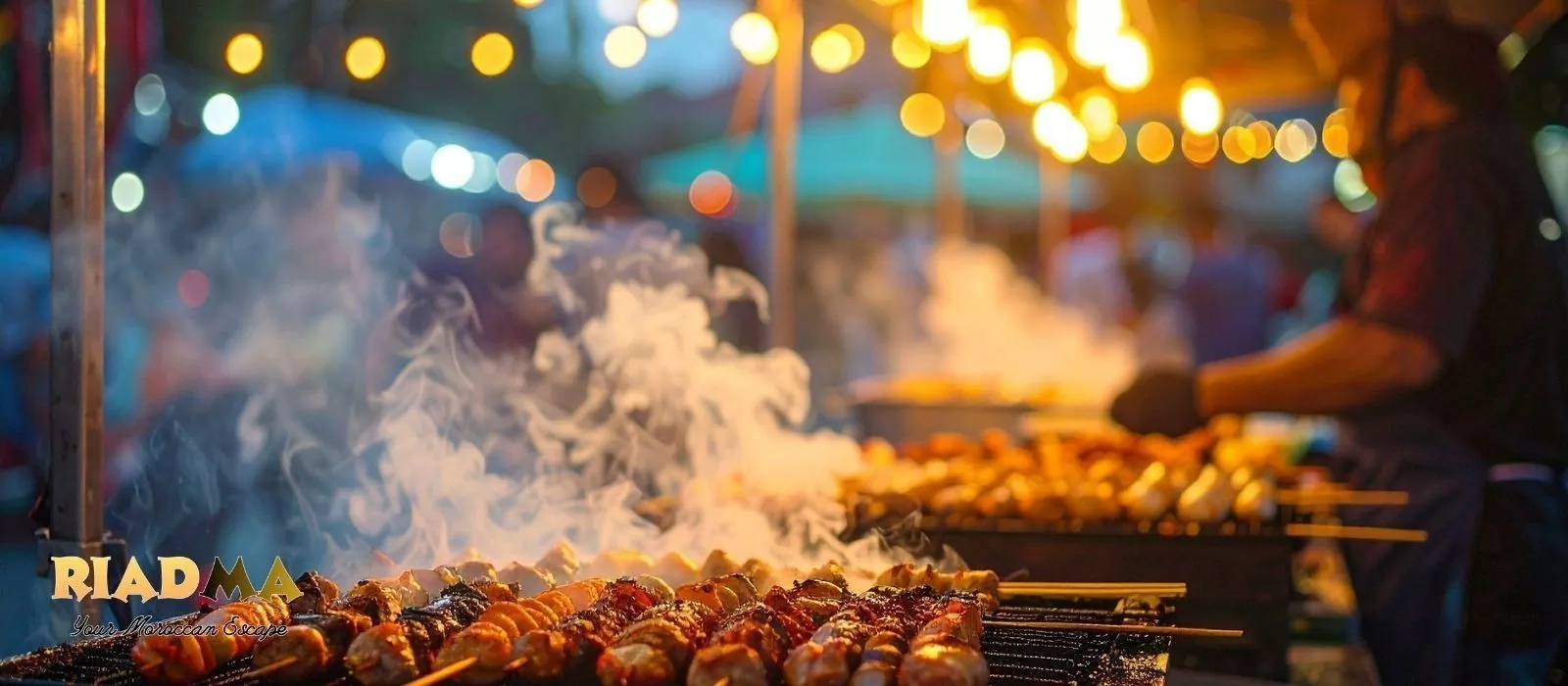
Street food in Morocco follows the rhythm of the day. Early mornings smell of hot bread and simmering soups. Afternoons bring grilled meats and sandwiches wrapped in paper. Nights — especially in cities like Marrakech — explode with energy, smoke, and sizzling grills.
Unlike fast food elsewhere, Moroccan street food is rarely rushed. Even on the street, food is cooked with care. Spices are measured by instinct. Hands move with confidence learned over years.
Jemaa el Fnaa: The Beating Heart of Street Food
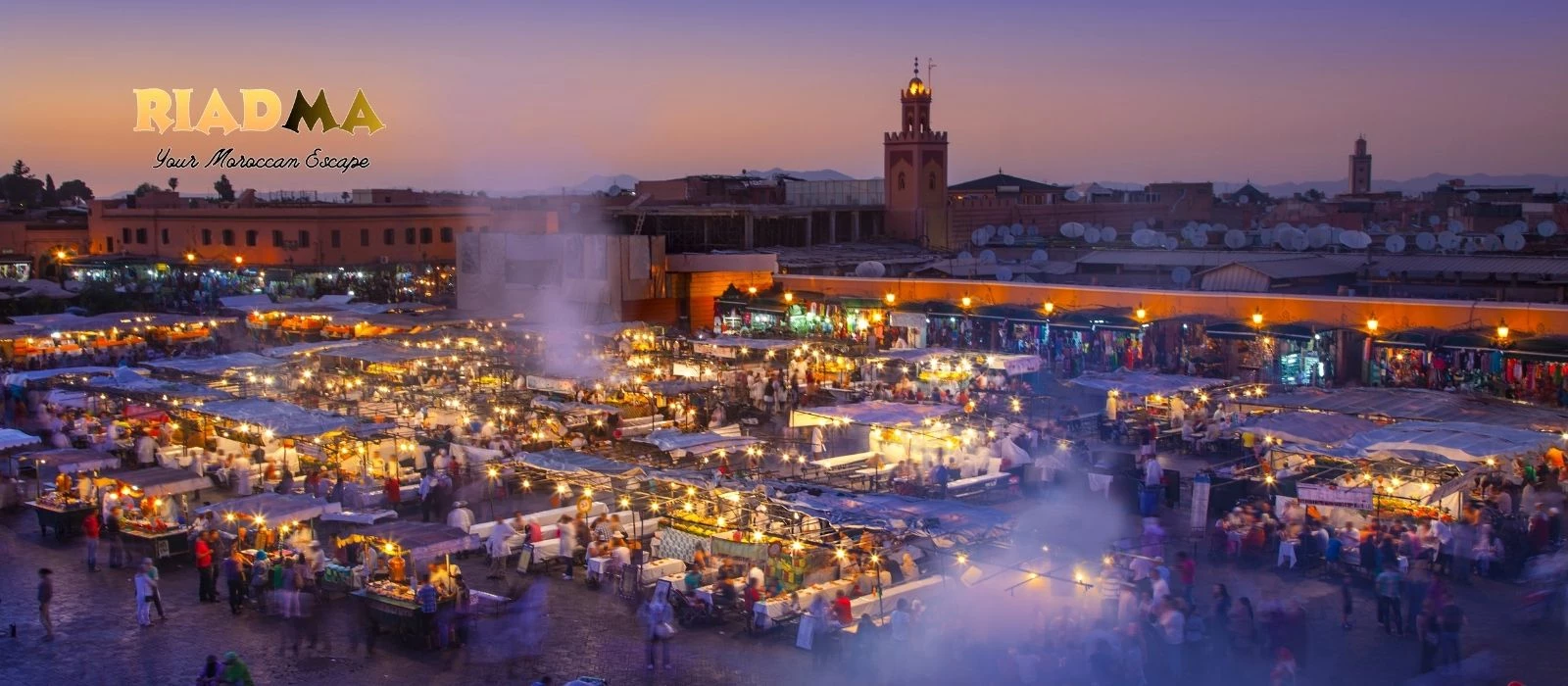
When night falls, Jemaa el Fnaa becomes a living kitchen. Steam rises from metal carts. Grills crackle. Voices call out invitations.
Jemaa el Fnaa food is not about spectacle alone — it’s about choice. You watch the food being prepared. You smell it before you taste it. You decide with your senses.
This square teaches an important lesson about moroccan street food: trust what looks busy, hot, and loved by locals.
1. Msemen and Harcha – Morning Comfort
Msemen is a flaky, square flatbread cooked on a hot griddle. Layers of dough fold into one another, creating something crisp on the outside and tender within.
Eaten plain, with honey, or dipped into olive oil, it is often sold from small carts in the early morning. Harcha, its thicker cousin made with semolina, has a gentle crunch and a comforting warmth.
These are not snacks you rush. They are breakfast conversations.
2. Sfenj – Morocco’s Answer to Doughnuts
Sfenj is deep-fried dough, light, airy, and irregular in shape. Served hot, often straight from the oil, it is eaten plain or dusted with sugar.
The smell alone draws you in. Slightly crisp, slightly chewy, sfenj tastes best when shared, fingers still warm from the paper it’s wrapped in.
3. Bocadillo Sandwiches – Urban Moroccan Snacks
Moroccan sandwiches are generous and practical. Soft bread filled with grilled meats, kefta, tuna, eggs, fries, and sauces layered without hesitation.
Each bite is messy and satisfying. This is cheap eats in Morocco at its finest — filling, flavorful, and made to fuel long days.
4. Kefta Skewers – Smoke and Spice
Kefta is minced meat mixed with cumin, paprika, garlic, and parsley, shaped onto skewers and grilled over charcoal.
The smell of kefta grilling is unmistakable. Served with salt, cumin, and bread, it is eaten quickly but remembered long.
5. Sardines – The Soul of Coastal Street Food
Along the coast and deep inland alike, sardines are everywhere. Fresh, affordable, and intensely flavorful.
Often stuffed with chermoula — a mixture of herbs, garlic, and spices — then fried or grilled, sardines are crispy, juicy, and deeply Moroccan.
Eating them hot, standing by the stall, is a rite of passage.
6. Snail Soup – Courage and Curiosity
Snails simmer slowly in a spiced broth infused with anise, thyme, licorice root, and other secret ingredients.
This dish divides first-time visitors. Locals sip the broth before eating the snails themselves. It’s believed to warm the body and aid digestion.
It tastes earthy, herbal, and surprisingly soothing.
7. Bissara – Warmth for Cold Mornings
Bissara is thick fava bean soup, often sold early in the morning from simple street stalls.
Drizzled with olive oil and sprinkled with cumin, it is humble, nourishing, and deeply comforting. Bread is essential.
This is street food that feels like home.
8. Maakouda – Golden Potato Fritters
Maakouda are crispy potato cakes, seasoned lightly and fried until golden.
They are often eaten in sandwiches or on their own, sometimes with harissa or cumin. Soft inside, crisp outside, they disappear quickly.
9. Khlii Sandwiches – Preserved Flavor
Khlii is preserved meat cooked slowly in fat and spices, then stored for months.
Street vendors warm it with eggs and serve it in sandwiches. The flavor is deep, salty, and intensely Moroccan.
10. Grilled Corn and Peanuts – Simple Pleasures
Sometimes street food is simplicity. Corn roasted over charcoal, salted and eaten hot. Peanuts boiled or roasted, sold in paper cones.
These snacks are eaten while walking, talking, watching the city move.
How to Eat Moroccan Street Food Safely
Safety is part of tradition. Locals know where to eat, and following them is the best advice.
- Choose busy stalls with high turnover
- Eat food that is cooked fresh and hot
- Avoid anything sitting uncovered for long periods
- Trust your senses — smell and sight matter
Moroccan street food is generally safe when eaten with awareness and respect.
Street Food and Moroccan Hospitality
Even on the street, hospitality remains sacred. Vendors greet you warmly. They explain what you’re eating. They smile when you enjoy it.
Food is not rushed. Payment is fair. Conversation is part of the meal.
Street Food vs Family Food
What you eat on the street often mirrors what families cook at home — just adapted to movement and simplicity.
The same spices, the same care, the same pride.
Why Moroccan Street Food Stays With You
- It connects you to daily life
- It is affordable and deeply flavorful
- It teaches you to eat slowly, even while standing
- It tells stories without words
Moroccan street food is not about novelty. It is about continuity. Recipes passed through hands, stalls passed through generations, flavors remembered long after the journey ends.
If you walk through Morocco with an open appetite and a little patience, the streets will feed you — generously, honestly, and memorably.