Moroccan Architecture: Riads, Kasbahs and Medinas Explained❤️
Moroccan architecture does not announce itself with height or spectacle. It reveals itself quietly, through thresholds, courtyards, shadows, and silence. To understand architecture in Morocco is to understand how people live — how they protect privacy, welcome guests, honor faith, and adapt to climate and community.
These buildings are not objects. They are relationships between space and life.
Architecture as a Reflection of Values
In Morocco, architecture is guided less by display and more by intention. Homes turn inward. Streets curve. Light is filtered, not exposed. These choices reflect values deeply rooted in Moroccan culture: modesty, hospitality, balance, and respect for the unseen.
Moroccan architecture is not designed to impress strangers from the outside. It is designed to protect and nurture those within.
The Medina: A Living Urban Organism
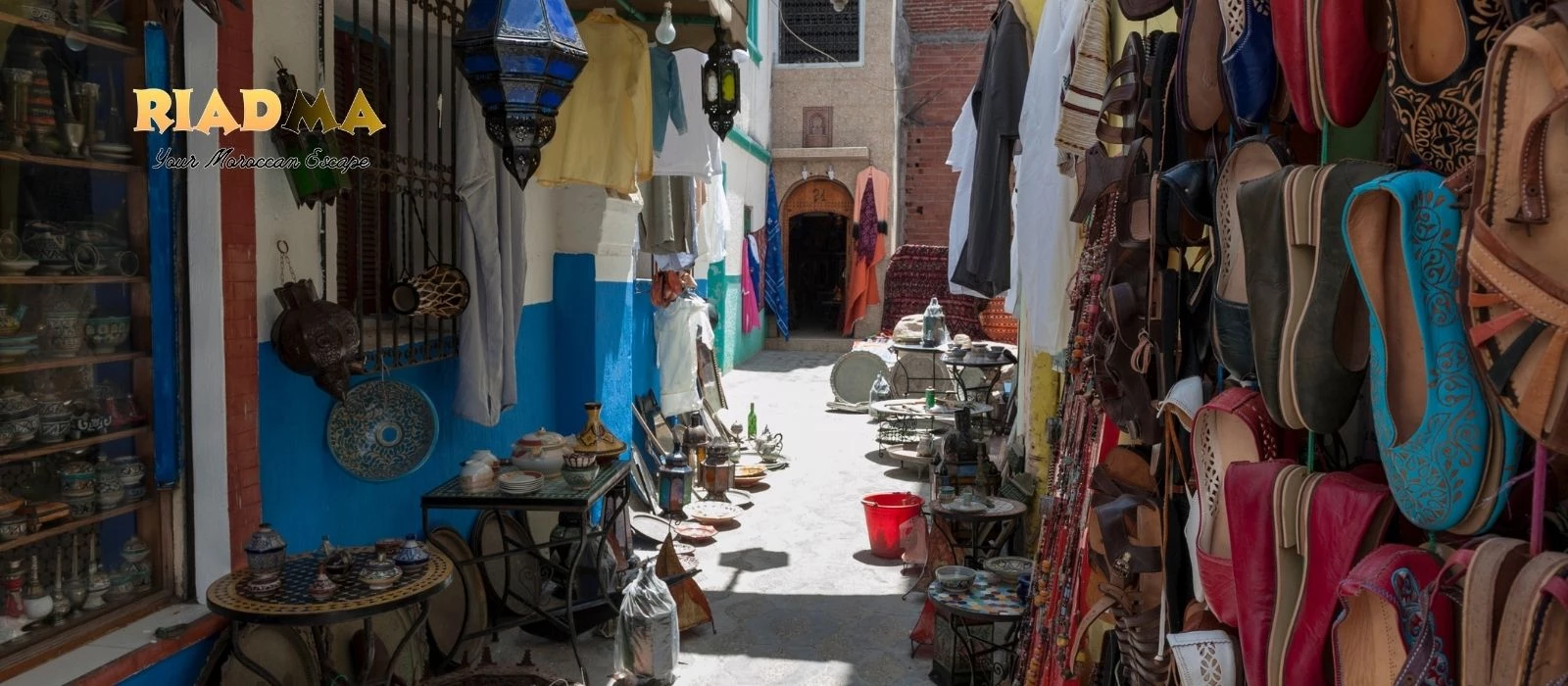
To understand Moroccan cities, one must understand the medina meaning. A medina is not simply an old town. It is a self-sustaining world — residential, spiritual, commercial, and social — woven into a dense human fabric.
Walking through a medina feels disorienting at first. Narrow alleys twist unexpectedly. Dead ends appear. Sounds echo strangely. This is not poor planning. It is intentional intimacy.
Why Medinas Are Built This Way
- Curved streets create shade and airflow
- Narrow passages slow movement and noise
- Complex layouts protect residents from intrusion
Medinas are designed for people, not vehicles. Life moves at walking pace.
Daily Life Inside the Medina
In the medina, architecture supports routine. Bakeries serve entire neighborhoods. Fountains provide water. Mosques anchor time through prayer.
Children grow up navigating the same paths their grandparents walked. Shopkeepers open doors that have been opened every morning for generations.
This continuity gives Moroccan architecture its emotional weight.
Riad Architecture: The Art of Inward Living
From the outside, a riad is humble. Often windowless. Sometimes almost invisible. Inside, it opens into calm.
Riad architecture is one of the most intimate expressions of Moroccan architecture. Built around a central courtyard, the riad creates a private universe protected from the outside world.
The Courtyard as the Heart of the Home
The courtyard is not decoration. It is function and philosophy combined.
- It brings light into the home
- It cools the air naturally
- It gathers family and guests
Fountains, trees, and tilework create balance. Sound softens. Time slows.
Hospitality Embedded in Design
Riad architecture reflects Moroccan hospitality. Guests are welcomed into beauty, not spectacle. Rooms open toward shared space, encouraging connection while preserving privacy.
This balance is central to Moroccan life.
Islamic Architecture in Morocco: Faith Made Space
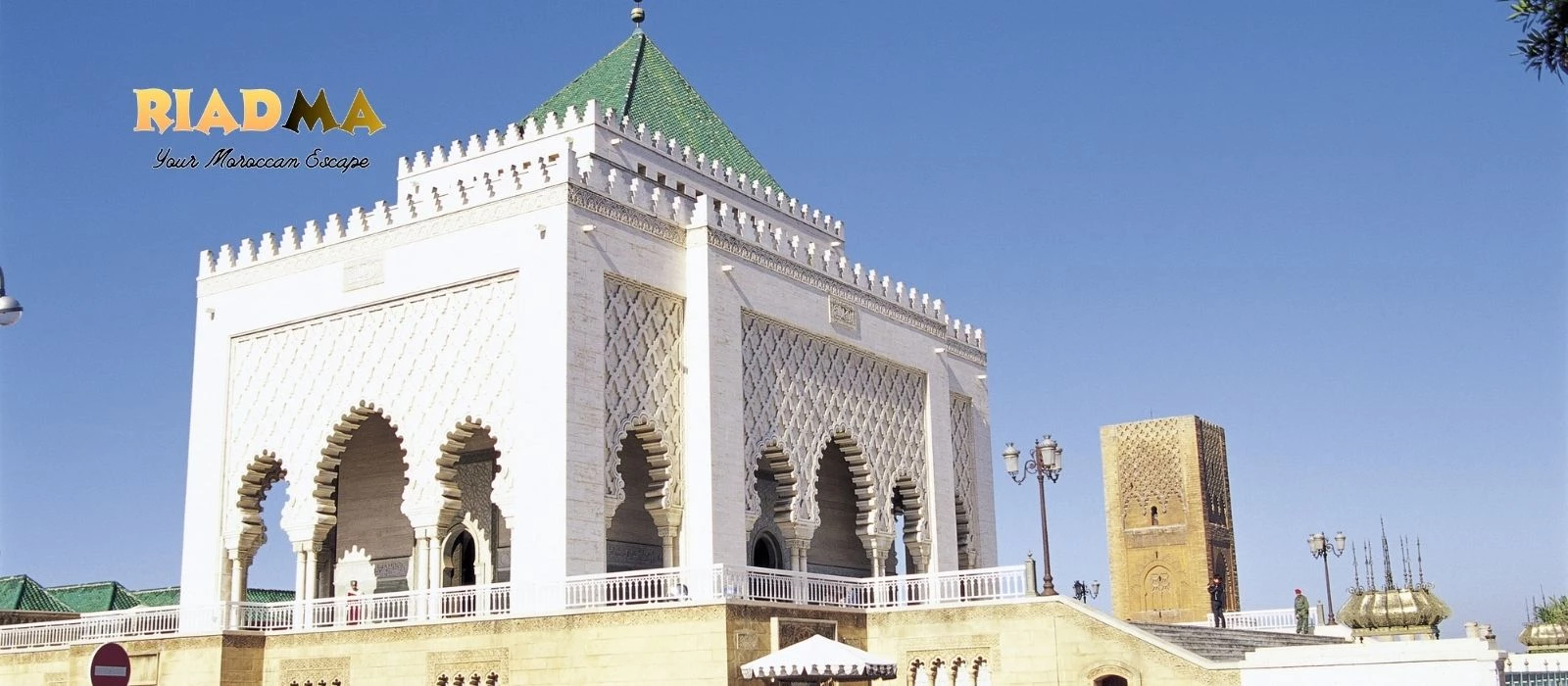
Islamic architecture in Morocco shapes cities quietly. Mosques do not dominate skylines. They integrate.
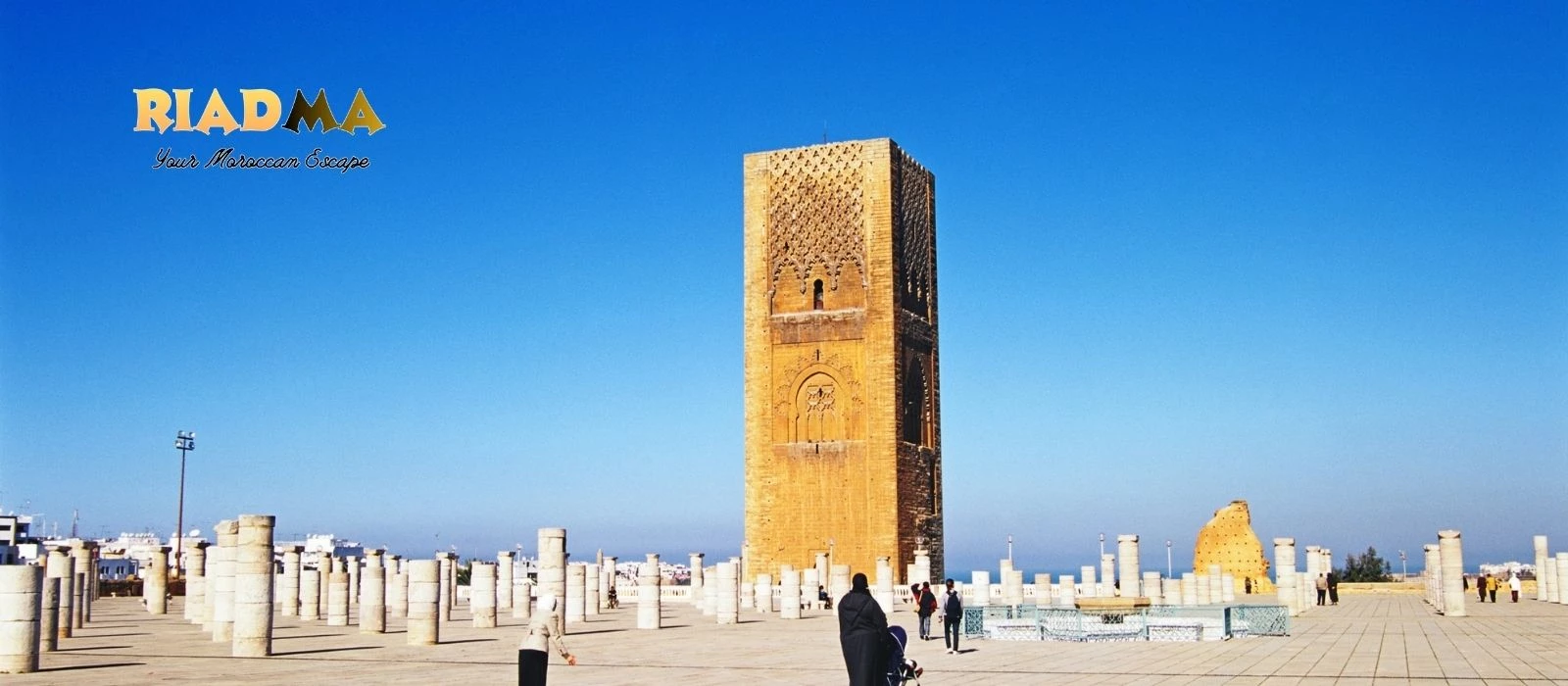
Minarets rise just high enough to be seen. Courtyards provide space for reflection. Geometry replaces figurative imagery.
Principles You Can Feel, Not Read
- Repetition creates calm
- Symmetry reflects balance
- Calligraphy turns words into structure
These elements guide movement and mood without instruction.
Kasbah in Morocco: Architecture of Protection
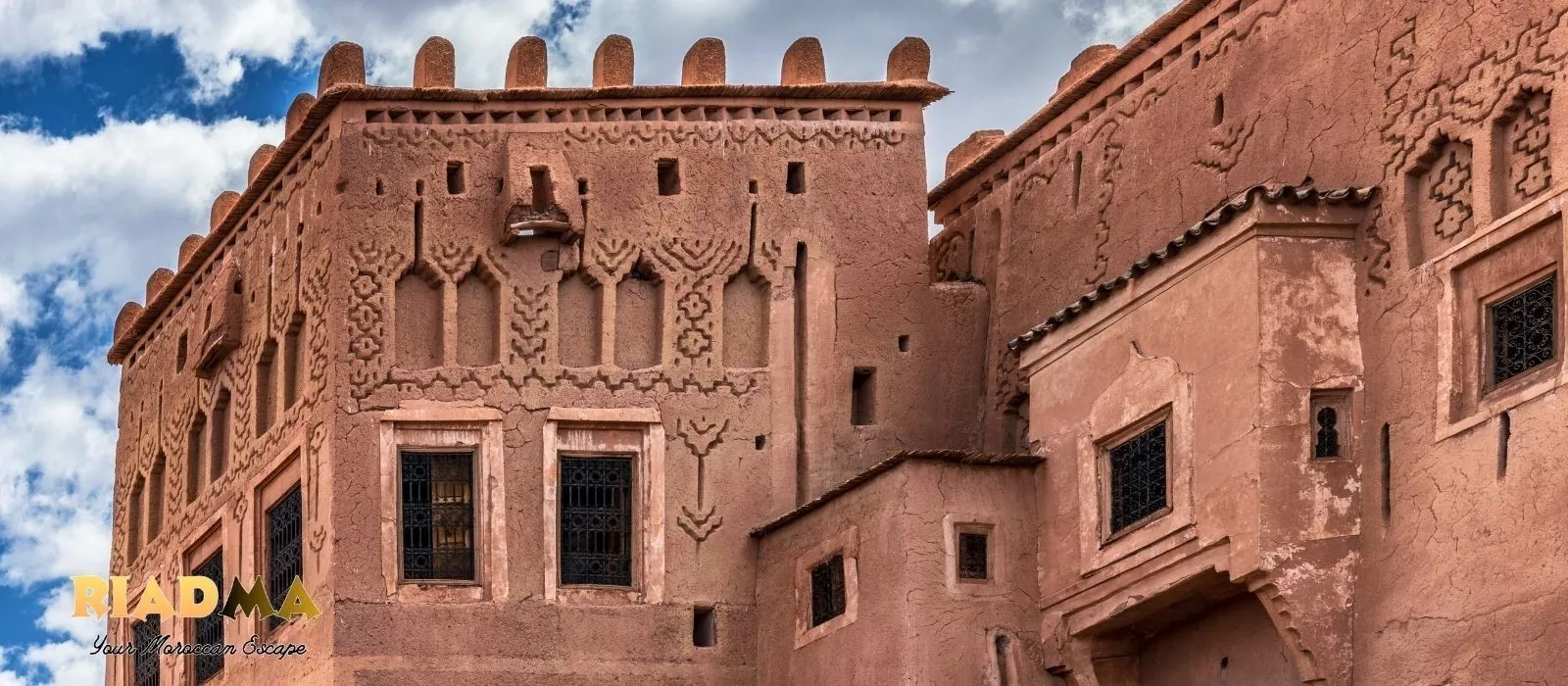
A kasbah in Morocco is a statement of survival. Built from earth and stone, kasbahs rise from their landscapes as extensions of the land itself.
Often found along former trade routes or in vulnerable terrain, kasbahs served as fortified homes, storage spaces, and symbols of authority.
Life Inside a Kasbah
Kasbahs were not cold fortresses. They were homes.
- Families lived across multiple levels
- Animals were sheltered below
- Grain and goods were stored safely
Every wall served a purpose. Every opening was measured.
Earth as Architecture
Many kasbahs are built from rammed earth. This material breathes. It insulates. It erodes gently.
Maintenance was part of life. Walls were renewed after rain. Architecture aged with its people.
This relationship between building and environment is one of Morocco’s greatest architectural lessons.
Zellige, Wood, and Plaster: Craft as Identity
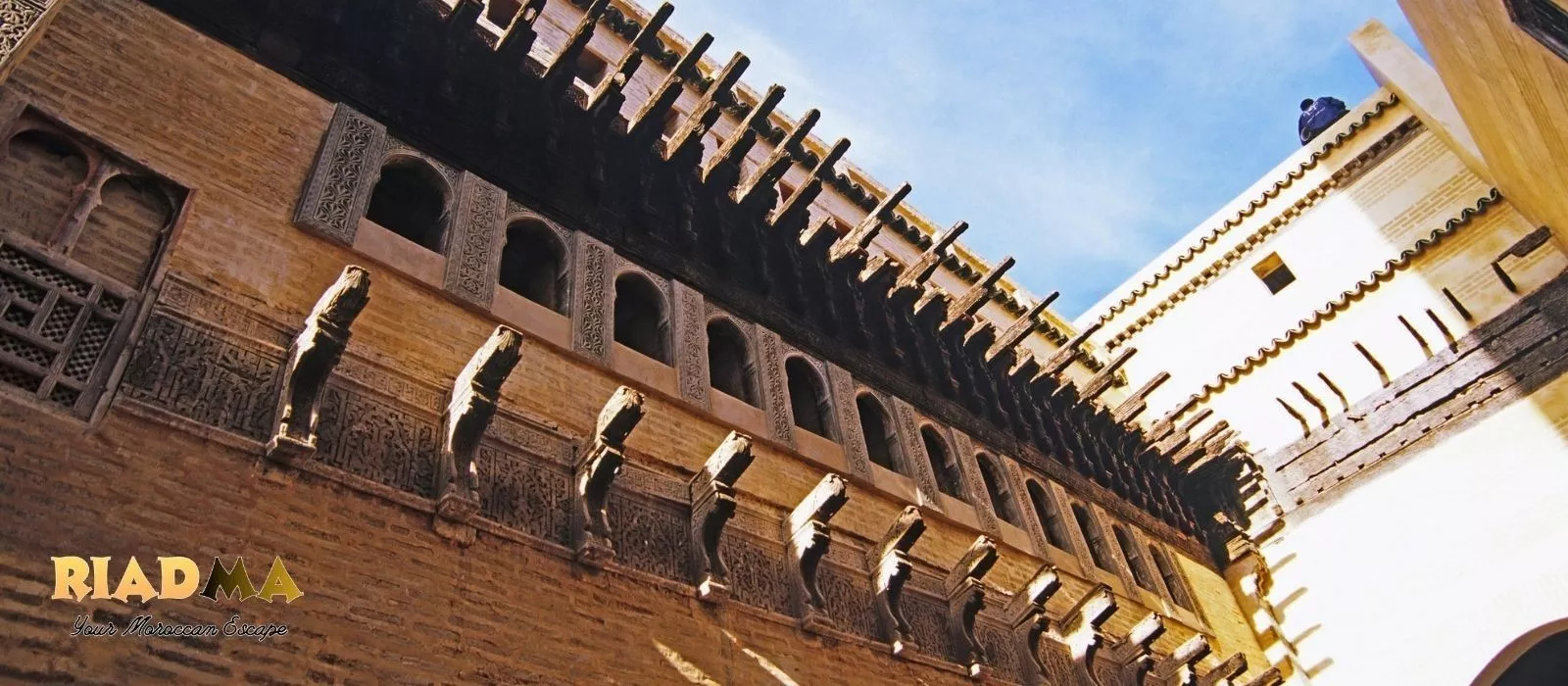
Moroccan architecture is inseparable from craftsmanship. Zellige tilework, carved cedar wood, and sculpted plaster are not embellishments — they are language.
Zellige: Geometry with Soul
Zellige patterns reflect infinite repetition. No single tile matters. The whole does.
- Hand-cut tiles assembled piece by piece
- Patterns guided by mathematical harmony
- Colors rooted in earth and minerals
Imperfection is part of the beauty.
Architecture and Social Order
Homes, streets, and public spaces reflect social values.
- Privacy is protected
- Community is encouraged
- Hierarchy is subtle, not imposed
Architecture teaches behavior without words.
Modern Morocco, Old Principles
Contemporary Moroccan buildings increasingly revisit traditional principles.
- Courtyards return in modern homes
- Natural ventilation replaces machinery
- Local materials regain value
The past is not abandoned. It is adapted.
How Visitors Experience Moroccan Architecture
To truly experience Moroccan architecture, one must slow down.
- Notice temperature changes between street and courtyard
- Listen to sound soften indoors
- Observe how light moves across tile and plaster
These details reveal intention.
Respecting Living Architecture
Medinas, riads, and kasbahs are not museums. People live here.
- Ask before photographing homes
- Dress modestly in residential areas
- Move with awareness
Respect allows architecture to remain alive.
What Moroccan Architecture Ultimately Teaches
Moroccan architecture teaches restraint in a loud world. It teaches patience in fast times. It teaches that beauty can be private, and strength can be quiet.
Riads remind us to turn inward. Kasbahs remind us to protect what matters. Medinas remind us that life is communal.
These buildings do not ask to be admired. They ask to be understood.
Leaving With a New Way of Seeing Space
Travelers often leave Morocco with changed expectations of architecture.
They notice shadows differently. They value silence more. They understand that space can heal.
Moroccan architecture does not end when you leave the country. It stays with you — in how you move, how you build, and how you live.