Best Souks and Markets in Morocco: What to Buy and How to Haggle❤️
Moroccan souks are not places you simply walk through. They are places you enter, slowly, with all your senses awake. The air is thick with spice and leather, the soundscape layered with voices, footsteps, metal tapping, and the occasional call to prayer drifting in from afar. To understand Moroccan souks is to understand Morocco itself — human, expressive, imperfect, and deeply alive.
This is not shopping in the modern sense. This is exchange. This is tradition. This is conversation.
The Soul of Moroccan Souks
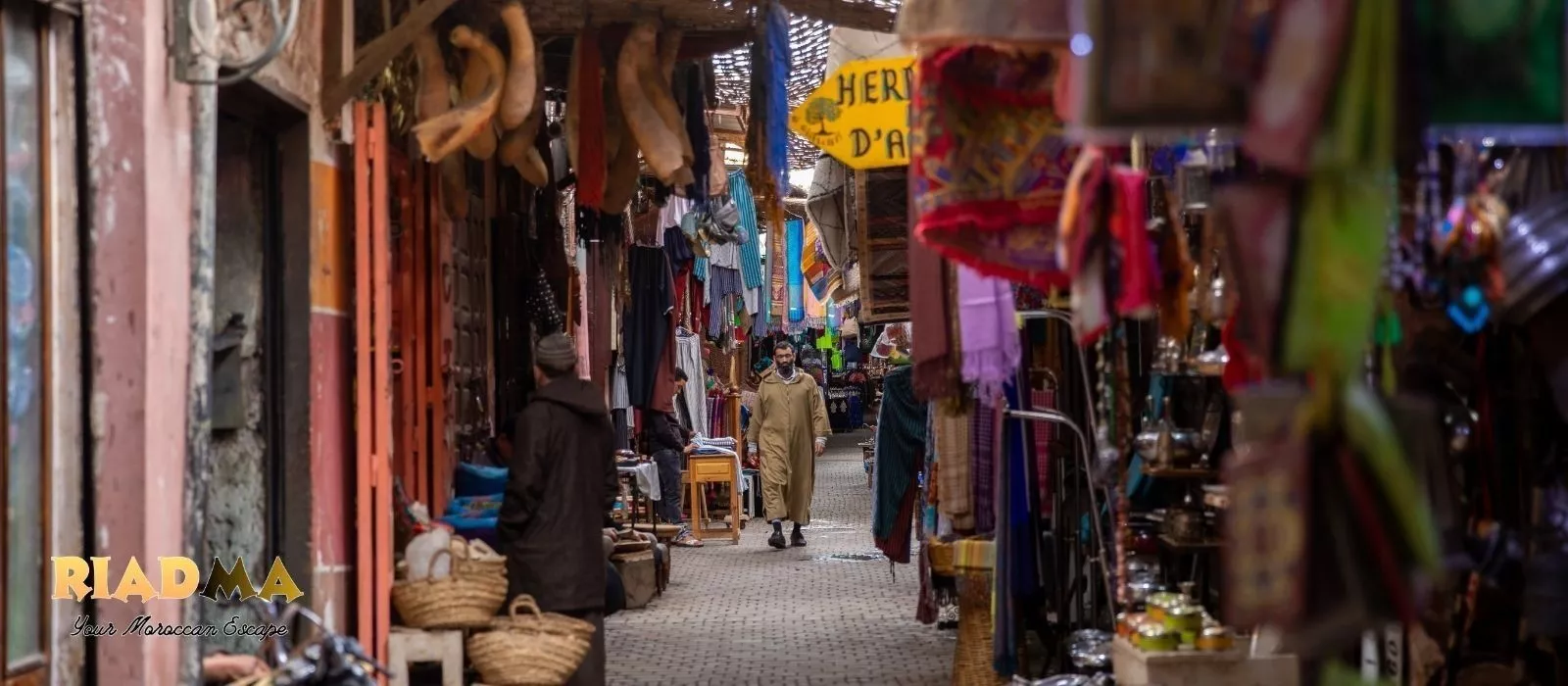
Long before shopping malls and price tags, Moroccan souks were centers of life. They were where farmers, artisans, travelers, and neighbors met. Goods were traded, stories were exchanged, and reputations were built over years, not transactions.
Today, while tourism has changed the rhythm of many markets, the essence remains. A souk is still a place where people work with their hands, pass down skills through generations, and measure success not only by profit but by pride.
Understanding Moroccan souks means seeing them as living spaces — not attractions.
Markets in Marrakech: Where the Maze Begins
Marrakech is often the first encounter travelers have with Moroccan souks, and it is an unforgettable one. The medina feels like a breathing organism, its narrow alleys unfolding into hidden squares filled with color and noise.
Jemaa el-Fna and the Surrounding Souks
By day, Jemaa el-Fna is a crossroads. By night, it transforms into a theater of food stalls, musicians, storytellers, and vendors. From here, the souks stretch outward like arteries.
- Souk Semmarine for textiles and slippers
- Souk El Attarine for spices and perfumes
- Souk Haddadine for metalwork
Each section carries its own personality. Walk slowly. Get lost on purpose. This is how the market introduces itself.
Fes: Craftsmanship as a Way of Life
In Fes, the souks feel quieter, more intimate. Artisans work in small workshops where techniques have changed little over centuries. Tanneries, weavers, and woodcarvers shape raw materials with patience and skill.
Shopping in Morocco reaches a different depth here. You are not browsing shelves — you are witnessing process.
When you buy in Fes, you are often buying directly from the maker. This creates a different kind of connection, one rooted in respect.
What to Buy in Moroccan Souks
Souvenirs from Morocco are not souvenirs in the disposable sense. They are objects designed to last, to be used, to age beautifully.
Handcrafted Textiles
- Wool rugs woven by Amazigh women
- Blankets and throws dyed with natural pigments
- Traditional scarves and shawls
Each textile tells a story — of region, climate, and family heritage.
Leather Goods
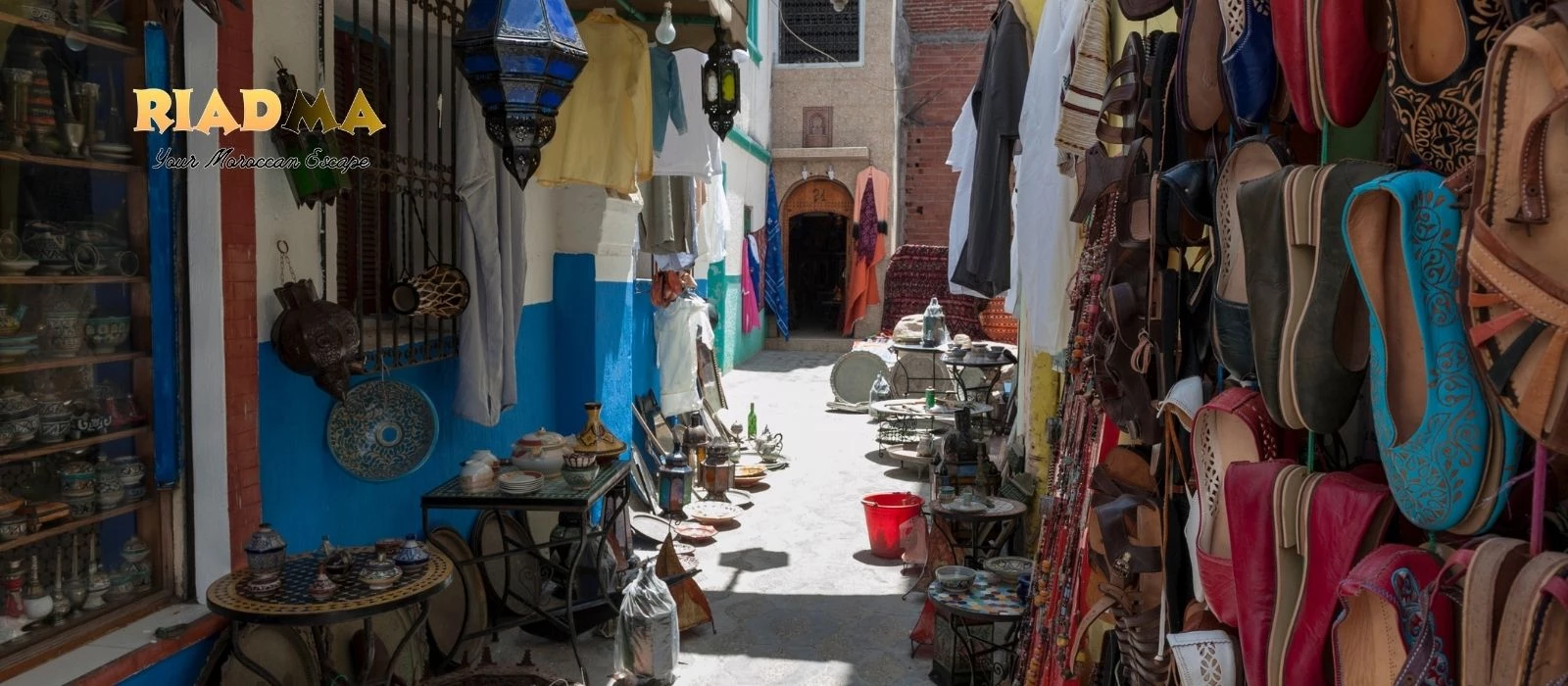
- Babouche slippers
- Hand-stitched bags
- Belts and poufs
Moroccan leather is known for its softness. The smell is part of the experience.
Ceramics and Pottery
- Hand-painted plates
- Tajine dishes
- Zellige-inspired designs
Imperfections are signs of authenticity, not flaws.
Spices and Food Products
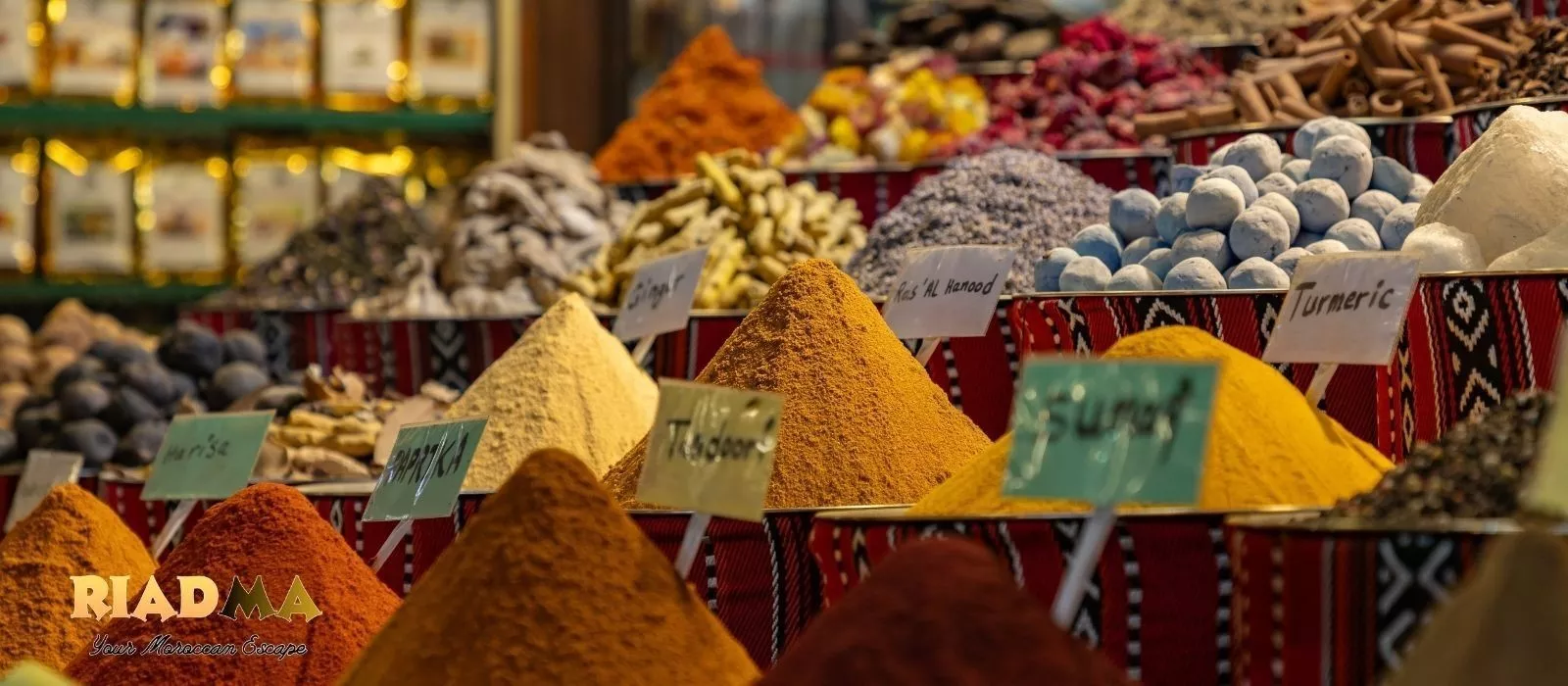
- Ras el hanout blends
- Saffron from the Atlas region
- Argan oil and olives
Ask questions. Vendors are often proud to explain how things are grown, harvested, or mixed.
How to Haggle in Morocco Without Losing Respect
How to haggle in Morocco is less about strategy and more about attitude. Bargaining is not confrontation — it is dialogue.
The First Price Is an Invitation
The initial price is rarely final. It opens a conversation. Smiling, greeting, and taking interest changes everything.
- Never show impatience
- Do not insult the item or the seller
- Know your maximum price quietly
Walking Away Is Part of the Dance
Sometimes, walking away is not rejection — it is continuation. Sellers may call you back. Or not. Both outcomes are normal.
If you reach an agreement, honor it. Changing your mind afterward breaks trust.
Daily Life Behind the Stalls
Each stall represents a family, a routine, a livelihood. Many vendors arrive early, open shutters by hand, and sit for hours waiting. Some days are good. Others are quiet.
Conversations often drift beyond products — to weather, football, family, or politics. Accepting a moment of human exchange enriches the experience.
Women in the Souks
While many visible vendors are men, women play essential roles — as weavers, dyers, embroiderers, and producers. In some cooperatives, women manage the entire process.
Supporting these spaces helps preserve traditions and independence.
Modern Changes, Old Rhythms
Moroccan souks are adapting. Mobile phones, online orders, and shipping services are now common. Yet the core remains unchanged.
A handshake still seals many deals. Reputation still matters.
Souks Beyond Marrakech and Fes
Every city has its own market rhythm.
- Essaouira’s souks feel relaxed and coastal
- Chefchaouen offers calm streets and local crafts
- Rural weekly markets serve nearby villages
These markets are less about tourism and more about community.
What Not to Do in Moroccan Markets
- Do not photograph people without permission
- Do not mock prices or bargaining culture
- Do not treat vendors as obstacles
Respect turns shopping into storytelling.
Leaving With More Than Bags
You may leave the souks carrying rugs, spices, or ceramics. But what stays longer are the moments — laughter during negotiation, tea shared mid-conversation, the rhythm of footsteps on stone.
Moroccan souks are not about buying things. They are about understanding value — human value, time, and craft.
When approached with patience and respect, markets in Morocco offer something rare: connection. And that, more than any souvenir, is what you take home.